



Most people are used to “annual blood tests” where the doctor simply says, “Everything is normal, see you next year.” For longevity, that bar is far too low. In longevity medicine, we are not asking, “Are you sick yet?” We are asking, “Are your numbers “optimal” for a long, healthy life?”
An advanced longevity blood panel is designed to answer that question. It looks at the quality of your metabolism, arteries, inflammation, organs and even your biological age – often 5–10 years before standard tests would show a problem.
This guide will walk you through which biomarkers to test for and how to interpret them.
Step 1: Shift from “normal” to “optimal”
Traditional lab reports compare you to a wide slice of the population. If you fall inside that range, you are labelled “normal”. The problem is that the “normal” population now includes high rates of pre‑diabetes, fatty liver, obesity and early cardiovascular disease.
In longevity care, we focus on **optimal** ranges – levels that are associated with lower long‑term risk and slower biological aging. That means:
– A marker can be “normal” but still sub‑optimal for healthspan.
– Small shifts within the normal range (for example, HbA1c rising from 5.1 to 5.6) may still deserve attention.
Step 2: Read your blood work by “systems,” not line by line
Most lab reports are long, and it is easy to get lost in individual numbers. A much clearer way is to group your results into body systems. Think in terms of stories rather than isolated data points.
- Metabolic and glucose control – these markers tell you how well you handle carbohydrates and energy:
– Fasting glucose – your blood sugar after an overnight fast.
– HbA1c – your average blood sugar over the past 2–3 months.
– Fasting insulin and HOMA‑IR – early indicators of insulin resistance, often abnormal years before glucose.
If these are creeping up, it suggests your cells are becoming less responsive to insulin – a core driver of accelerated aging, cardiovascular disease and dementia.
- Lipids and cardiovascular risk.
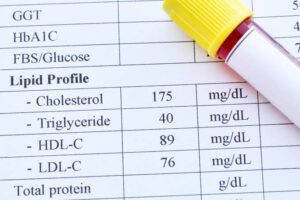
Beyond “good and bad cholesterol,” advanced panels usually include:
– Full lipid profile – total cholesterol, LDL‑C, HDL‑C and triglycerides.
– ApoB – the number of atherogenic particles that can enter artery walls.
– Lp(a) – a genetically influenced marker that can dramatically raise lifetime risk in some people.
– Triglycerides/HDL ratio – a simple, powerful insulin‑resistance and cardiovascular marker.
For longevity, we care less about “normal” cholesterol and more about keeping ApoB and triglycerides/HDL in a truly artery‑protective zone.
- Inflammation and immune balance – chronic, low‑grade inflammation silently ages your arteries, brain and joints:
– hs‑CRP – a sensitive marker of systemic inflammation.
– White blood cell count and differential – can hint at chronic infection, immune stress or imbalance.
– Neutrophil‑to‑lymphocyte ratio (NLR) – an emerging marker linked to cardiovascular and overall mortality risk.
Ideally, these stay low and stable. Repeatedly elevated hs‑CRP or NLR suggests your body is constantly “on fire” and needs a root‑cause review.
- Liver and detoxification
Your liver handles detoxification, hormone metabolism and energy regulation:
– ALT, AST – enzymes showing liver cell stress.
– GGT – often elevated with oxidative stress, alcohol excess or fatty liver.
– Alkaline phosphatase – can relate to bile flow, bone and liver.
Subtle but persistent elevations, even within the upper end of the “normal” range, can signal metabolic strain and warrant action.
- Kidney and filtration
Healthy kidneys quietly filter your blood 24/7:
– Creatinine and eGFR – basic filtration markers.
– Cystatin C – a more sensitive filtration marker in some people.
– Uric acid – linked to gout, but also to metabolic and cardiovascular risk.
For longevity, we want kidney function to stay high and stable for as long as possible, not simply “above the cut‑off.”
- Nutrient and hormone status
These markers set the background for energy, mood, muscle and resilience:
– Vitamin D, B12, folate – central to immune function, mood and mitochondrial health.
– Thyroid panel (TSH, free T4 ± free T3) – controls metabolic rate and energy.
– Sex hormones (oestrogen, progesterone, testosterone, SHBG) – vital for bone, brain and muscle.
– IGF‑1 – linked to growth and repair, but also to cancer risk; balance matters.
Rather than treating them as “nice extras”, longevity medicine sees these as levers you can optimise.
When you read your report, walk through it system by system. Ask: “Is this system telling a story of stability, early strain or clear overload?”
Step 3: Focus on a core “longevity starter set”
For many patients, it helps to start with a shortlist of markers that strongly track healthy aging. A simple starter set includes:
– HbA1c** – if this climbs, your blood vessels and nerves are aging faster than they need to.
– Fasting insulin or HOMA‑IR – reveals insulin resistance early, even when glucose still looks fine.
– ApoB and triglycerides/HDL ratio – reflect the number and behaviour of cholesterol‑carrying particles that actually cause plaque.
– hs‑CRP** – captures chronic inflammation that accelerates every age‑related disease.
– GGT and ALT – early warning signs of metabolic fatty liver and oxidative stress.
– Vitamin D – low levels correlate with frailty, low immunity and increased mortality in multiple studies.
Step 4: Understand biological age from blood markers
Many advanced panels now calculate a blood‑based biological age. These algorithms use a handful of routine markers – such as albumin, alkaline phosphatase, creatinine, glucose, CRP, white cell counts and red cell distribution width – to estimate how old your body behaves compared with your actual age.
– If your biological age is “higher” than your actual age, your current lifestyle and biology are aging you faster; it is a powerful wake‑up call, not a sentence.
– If your biological age is “lower”, your current system is working; the task is to maintain and refine.
The most important point is that biological age is “dynamic”. When you change your nutrition, exercise, sleep, stress and environment, your biomarkers – and therefore your biological age – can shift over months to years. That is what we track in follow‑up panels.
Step 5: Look at trends, not just snapshots
A single blood test is like a photograph. Longevity medicine is interested in the movie.
– Are glucose, HbA1c and triglycerides slowly rising each year, even if still “normal”?
– Has ApoB or hs‑CRP come down after diet changes, weight loss or new training?
– Has biological age moved closer to, or further from, chronological age?
Trends tell you whether your plan is working. They also help you catch problems early, when changes are easier and more effective.
How Advanced Integrative Health Screening Reveals Your True Biological Age
Step 6: Turn patterns into practical interventions
An advanced panel only becomes valuable when it leads to action. Link each pattern to a small set of clear interventions you can make.
If the “metabolic story” looks off, for example: higher HbA1c, fasting insulin, triglycerides or triglycerides/HDL ratio.
I would recommend:
– Reducing refined carbohydrates and sugary drinks.
– Prioritising protein and fibre at each meal.
– Adding resistance training two to three times per week and daily walking.
– Considering time‑restricted eating, if appropriate and medically safe.

If the “inflammation story” looks off, for example: elevated hs‑CRP or NLR.
I would recommend:
– Improving sleep quality and duration.
– Addressing visceral fat, oral health, gut health and exposure to ultra‑processed foods.
– Supporting omega‑3s, vitamin D optimisation and other personalised anti‑inflammatory strategies.
If the “liver story” looks off, for example: GGT or ALT creeping up across several tests.
I would recommend:
– Reducing alcohol, late‑night eating, and high‑fructose foods and drinks.
– Increasing physical activity and, where needed, structured weight reduction.
– Reviewing medications and supplements that may burden the liver.
Step 7: Work with a clinician and schedule follow‑up
Finally, an advanced longevity panel is not designed for self‑diagnosis. It is a powerful tool when interpreted with a clinician who understands both conventional medicine and longevity‑focused, preventive care.
At Restore Integrative Medical Clinic, we help you to:
– Prioritise which patterns to tackle first.
– Agree on concrete lifestyle, nutrition and, if needed, supplement or medication changes.
– Decide how often to repeat testing – typically every 3–12 months, depending on risk and goals.
Over time, the goal is simple but profound: to watch your numbers – and your biological age – move in a direction that supports a longer healthspan, not just a longer lifespan.
This article is for educational purposes only and is not a substitute for professional medical advice. Always talk to a qualified healthcare provider about diagnosis and treatment.
Written by Dr Ho See Yunn
Longevity Physician
Functional Medicine Practitioner
Begin Your Longevity Journey in Central, Hong Kong
Whether you’re seeking more energy, hormonal balance, or optimizing your longevity biomarkers, our team at Restore Integrative Medical Clinic is here to guide you.
Book your personalised consultation today and discover what’s possible when your care is built around you.
Restore Integrative Medical Clinic — Room 1602, 16/F, 1 Duddell Street, Central, Hong Kong · +852 2331 8816 · restoreintegrativemedical.com