 Vera Coetsee
I help clients manage poor digestive issues and balance their hormones, so that they can ditch the bloat, skyrocket their energy, loose weight, and be free from food cravings. My mission and passion are to support busy people to restore their gut and hormone health naturally, improve their energy levels, and live their most nourished lives.
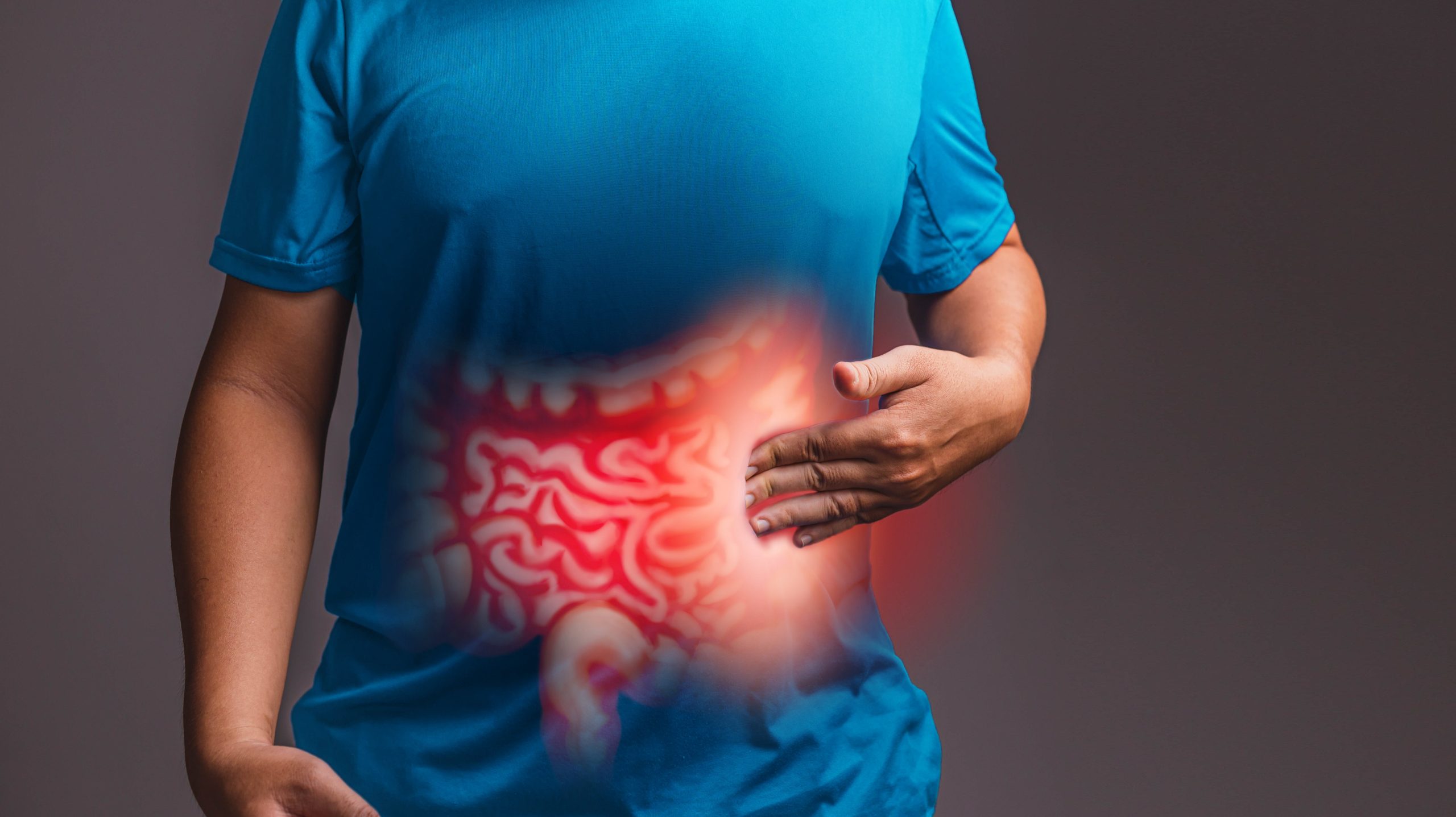
You can eat a nutrient-dense diet, take a quality multivitamin, and still end up deficient. That’s because eating a nutrient and absorbing it are two entirely different events — and everything that happens in between takes place in your gut.
When the digestive tract is inflamed, damaged, overpopulated with bacteria, or short on stomach acid, absorption falters. Iron and the B vitamins are usually the first casualties, because both depend on very specific, very fragile stretches of gut real estate.
Absorption Is Location-Specific
Your gut isn’t one uniform tube. Each nutrient has a designated pickup point:
-
Iron is absorbed almost entirely in the duodenum, the first segment of the small intestine, along with the upper jejunum .
-
Folate (B9) is absorbed in the proximal jejunum via the proton-coupled folate transporter, which requires an acidic surface pH to function.
-
Vitamin B12 requires a multi-step relay: stomach acid and pepsin free it from food protein, intrinsic factor from gastric parietal cells binds it, and the complex is finally absorbed in the terminal ileum.
That specificity is the vulnerability. Damage the duodenum and iron intake collapses regardless of diet. Damage the terminal ileum and B12 has nowhere to go.
Celiac Disease: Duodenal Damage Meets Iron
Celiac disease is the clearest illustration. The immune reaction to gluten concentrates in the proximal small intestine, flattening the villi exactly where iron is absorbed.
The result is dramatic: iron deficiency anemia may be present in over half of celiac patients at diagnosis, and for many adults it is the only visible sign of the disease. Villous atrophy reduces absorptive surface area, depletes the brush-border ferrireductase enzyme needed to move iron across the membrane, and destroys the enterocyte iron-storage capacity.
Critically, this can happen without diarrhea or weight loss. Unexplained iron deficiency with no obvious bleeding source is a legitimate reason to screen for celiac disease.
Inflammatory Bowel Disease: A Double Hit
In Crohn’s disease and ulcerative colitis, micronutrient deficiencies affect more than half of patients, most commonly iron, B12, vitamin D, folate, and zinc. Iron deficiency alone is reported in 26.5% to 62.5% of IBD patients, making it the single most common deficiency in this group.
Two mechanisms stack here.
Mechanical loss of absorptive tissue. Crohn’s disease characteristically involves the terminal ileum — the only site where the B12–intrinsic factor complex can be absorbed. Patients with ileal inflammation are roughly four times more likely to be B12 deficient, and those who have had ileal or ileocolonic resection are at highest risk. Folate deficiency is the second most common, reaching up to 30% in adults with Crohn’s.
Inflammation shutting down the door. Even with intact tissue, active inflammation blocks iron uptake. IL-6 drives the liver to produce hepcidin, a hormone that degrades ferroportin — the only protein that exports iron out of intestinal cells into the bloodstream. Iron enters the enterocyte, gets trapped, and never reaches circulation. This is why oral iron so often fails during a flare.
SIBO: Bacteria Eating Your B12 First
In small intestinal bacterial overgrowth, bacteria colonize the small bowel where they don’t belong and consume nutrients before you can. B12 is the signature casualty: excess anaerobes both consume it and convert it into inactive analogues that compete with real B12 for binding and transport.
The tell-tale pattern is low B12 with normal or even elevated folate, since some gut bacteria synthesize folate while consuming cobalamin. B12 deficiency appears in as many as three-quarters of SIBO patients in some series.
Low Stomach Acid: The Overlooked Cause
Most dietary iron arrives as ferric iron (Fe³⁺), which is insoluble. Gastric acid is required to reduce it to absorbable ferrous iron (Fe²⁺), which is why achlorhydria is classically associated with iron deficiency anemia.
Three common scenarios reduce acid:
Chronic atrophic gastritis destroys parietal cells, cutting both acid and intrinsic factor — causing B12 and iron malabsorption simultaneously.
H. pylori infection raises the odds of iron deficiency anemia by about 72% versus uninfected people, through hypochlorhydria, ascorbic acid degradation, bacterial iron sequestration, and low-grade bleeding.
Long-term proton pump inhibitors reduce non-heme iron absorption and impair release of food-bound B12 by blunting intragastric proteolysis. Twelve months of PPI use has been linked to measurably lower iron stores and B12 levels . Notably, crystalline B12 in supplements does not require acid to be released, so supplemental forms are less affected than food-bound B12.
Signs Your Gut May Be the Bottleneck
Consider absorption — not just intake — when you see:
-
Iron deficiency that doesn’t respond to oral supplements
-
Fatigue, brain fog, tingling in hands or feet, or a sore tongue
-
Anemia with no identifiable bleeding source
-
Bloating, irregular stools, or reflux alongside low labs
-
Deficiency in multiple nutrients at once, which points to a shared absorptive site rather than a dietary gap
What to Discuss With Your Clinician
Useful starting points include ferritin plus CRP (inflammation falsely inflates ferritin), serum B12 with methylmalonic acid or homocysteine for functional status, red blood cell folate, celiac serology, H. pylori testing, and a review of every acid-suppressing medication you take.
Treatment follows the mechanism. Villous atrophy needs a strict gluten-free diet. Inflammation-driven hepcidin elevation often requires intravenous rather than oral iron. Ileal resection or absent intrinsic factor calls for injected or high-dose sublingual B12. SIBO needs the overgrowth addressed before supplementation will hold.
Fixing the gut usually does more for your nutrient status than adding another supplement on top of a broken absorption pathway.
Written by Dr Ho See Yunn
Chief doctor Restore Integrative Medical Clinic
Longevity physician
Functional medicine practitioner
Begin Your Longevity Journey in Central, Hong Kong
Whether you’re seeking more energy, hormonal balance, or better sleep during the peri or postmenopausal period, our team at Restore Integrative Medical Clinic is here to guide you.
Book your personalised consultation today and discover what’s possible when your care is built around you.
Restore Integrative Medical Clinic — Room 1602, 16/F, 1 Duddell Street, Central, Hong Kong · +852 2331 8816 · restoreintegrativemedical.com
This article is for educational purposes only and is not a substitute for professional medical advice. Always talk to a qualified healthcare provider about diagnosis and treatment.